
Knigorad - Read Novels & Books
Moboreader Technology USA Co LtdBooks & Reference
4.3169.00 Reviews
- Version
- 6.1.5
- Installs
- 500.00K
- Age Rating
- Mature 17+
Screenshots
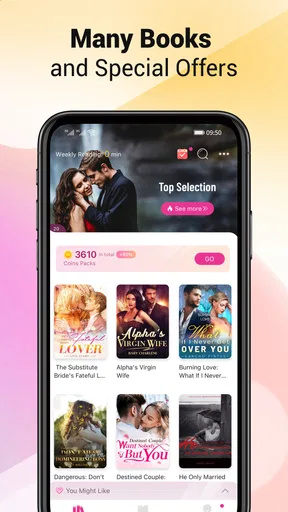
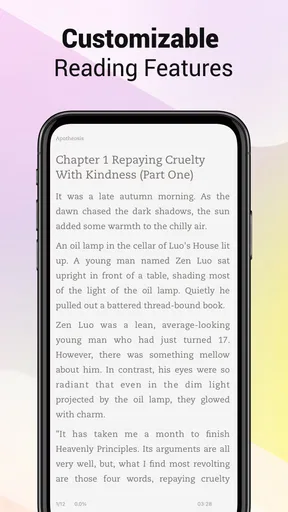
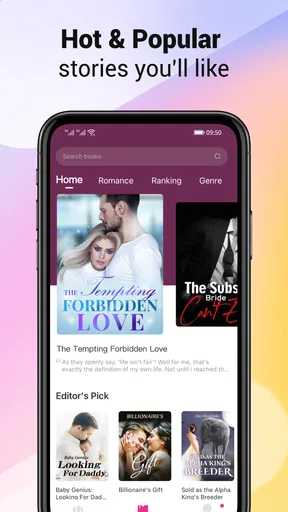
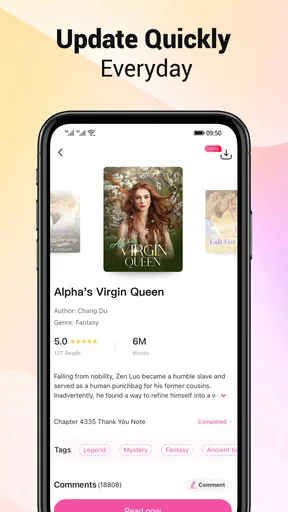
Our Review of Knigorad - Read Novels & Books
 Analysis by Appyee
Knigorad - Read Novels & Books is the kind of reading app I open when I want a story that keeps moving rather than a single book I already own. Its focus is on romance, fantasy, and webnovels, with new reading material appearing through ongoing updates. That makes it feel closer to a constantly changing digital bookshelf than to a traditional ebook reader.
I reviewed it as a Books & Reference app from Moboreader Technology USA Co Ltd, and my main impression is clear: its strongest capability is helping readers follow serialized fiction without having to search for a new story every time they finish one. That sounds simple, but it changes the way the app fits into a daily routine. Instead of treating reading as a planned session with a fixed book, I found myself checking in for the next part of a story, browsing another title, and deciding how much time I wanted to spend.
The app is free to install, carries a Mature 17+ age rating, and has reached over 500 thousand installs. Its average rating is 4.3 from around 2 thousand ratings, which suggests that many readers find the format appealing, while also leaving room for the usual differences in taste and tolerance for paid reading. It runs on Android 7.0 or later, and the current version is 6.1.5.
Why ongoing novel updates are the real attraction
I find the appeal of ongoing fiction is less about having another title to browse and more about building a reason to return tomorrow. In this section, I look at how that rhythm can make brief reading breaks feel purposeful, while also explaining why a reader who prefers finished books may find the same pauses frustrating.
A reading habit built around continuation
Most ebook apps are designed around completed books. You choose a title, read at your own pace, and eventually reach the final page. Knigorad takes a different route by putting trending romance, fantasy, and webnovels at the center of the experience. The important distinction is not simply the number of stories available; it is the feeling that a story can remain part of your routine for a longer period through daily updates.
For me, this works best when I want a light but regular reading habit. I do not need to decide which full novel to download before leaving home. I can return to a story I am already following, read a manageable section, and stop without feeling that I have abandoned a large reading project. That structure is particularly comfortable for people who read during short breaks, before sleeping, or while waiting for an appointment.
The serialized approach also changes how suspense works. With a complete ebook, I can continue immediately whenever I have time. With ongoing fiction, the pause between updates becomes part of the experience. That can make a romance or fantasy plot easier to remember from one day to the next, but it can also be frustrating if I reach an important moment and have to wait for the story to continue.
Genres that suit the format
Romance is a natural match for regular updates because relationships, misunderstandings, revelations, and emotional turning points give readers a reason to return. Fantasy benefits in a different way: a continuing story can gradually expand its setting and characters without requiring me to absorb everything in one sitting. Webnovels often rely on that steady rhythm, so the app’s focus feels more deliberate than a general-purpose reading shelf.
I would not choose this app first for someone looking mainly for literary classics, academic references, technical manuals, or a broad nonfiction collection. Its appeal is much narrower and more enjoyable when your reading mood is fiction-led. If you already know that you prefer finished novels with a carefully edited, fixed structure, a conventional ebook store or library app may be a better match.
What the capability changes on a normal day
Imagine a weekday in which I have ten minutes on a bus, another few minutes during lunch, and a quiet moment before bed. With a conventional book, I might spend part of that time deciding what to read. With Knigorad, the decision is easier when I am already following an ongoing story: I simply return and continue. The app becomes less about collecting books and more about maintaining a small set of reading appointments.
That is the most useful practical effect of daily updates. They lower the effort needed to start reading. I do not have to be in the mood for a long session, and I do not have to remember where I left off in a large pile of downloaded titles. The trade-off is that this convenience depends on enjoying the app’s particular selection and reading model.
How I used it in practice
I approach Knigorad as a reader rather than a collector: sample a story, pay attention to its pacing, and decide whether it deserves a place in a routine. The section that follows considers how to keep that process manageable, including a practical way to avoid letting browsing crowd out the reading itself.
Starting with discovery instead of a fixed reading list
My first approach was to treat the home experience as a discovery shelf rather than immediately committing to one title. That matters because serialized fiction can be a long-term choice. A story may sound attractive from its premise but not hold my attention after several sections. Browsing first helps avoid turning the app into a queue of unfinished novels.
I recommend giving a new story a short trial and judging three things separately: whether the opening creates enough curiosity, whether the writing is easy to follow on a phone, and whether the update rhythm suits your patience. A gripping premise alone is not enough if you dislike waiting between installments. This simple test is more useful than choosing only by genre label.
Because the content is rated Mature 17+, I would also treat the age label as part of the selection process rather than an incidental store detail. Adults may appreciate the wider emotional range, but I would not hand the app to a younger reader without checking whether the material fits that person. The rating is a practical reminder to consider the audience before recommending a specific story.
Reading in short sessions
The app makes the most sense when I use it in small, repeatable sessions. I might read one section while waiting, pause when my attention drops, and return later. This is different from sitting down with a printed novel for an uninterrupted hour. The phone format encourages frequent visits, so I find it helpful to decide in advance whether I am browsing or actually reading.
That distinction prevents one of the app’s main distractions: opening it for a story and then drifting through other titles. Discovery is enjoyable, but too much browsing can replace reading. My practical rule is to keep one primary story in focus and use the catalog only when I have genuinely lost interest. This preserves the benefit of daily continuation without creating a crowded list of half-started novels.
Managing the cost before it becomes annoying
Knigorad is free, but it includes in-app purchases ranging from $0.99 to $209.99 per item. That range is important for anyone who wants to read regularly. A free installation does not automatically mean that every part of a long-running story will be available without payment. Before becoming deeply invested, I would check how the reading flow presents access to later content and decide what spending limit feels comfortable.
I see this as a budgeting issue rather than an automatic flaw. Serialized fiction takes time to produce, and some readers are happy to pay for continued access. The problem appears when a reader starts several stories at once without tracking the possible cost of continuing them. My advice is to choose one story first, understand how purchasing fits into the reading experience, and avoid buying impulsively just because a chapter ends at a dramatic point.
This is also where Knigorad differs from a public library app or a conventional ebook subscription. Those alternatives may offer a clearer fixed-cost model, while a serialized reading app can make the cost feel connected to individual stories or sections. Readers who want predictable spending should compare that difference before settling into the platform.
Keeping expectations realistic about updates
The promise of daily updates is attractive, but I would not treat it as a guarantee that every story will match my preferred pace or remain equally engaging. Ongoing fiction is naturally uneven. Some sections may feel essential, while others seem to move slowly because the story is being extended over time. That is a normal weakness of the format, not something I would blame on one particular title.
I handle this by judging a story in small stages. If the plot continues to develop and I still care about the characters, I keep reading. If the story begins to feel like a chore, I stop rather than continuing only because I have already invested time. The app is at its best when the update structure creates anticipation; it is less satisfying when it turns reading into an obligation.
The best scenario for using Knigorad
For me, the app makes most sense when a phone is already the natural place to read and the available time comes in short, scattered moments. I’ll describe the everyday situations where that format fits, and where another kind of reading app may serve you better.
Readers who want a dependable fiction routine
The strongest use case is someone who enjoys romance or fantasy and wants a reason to return every day. This could be a commuter who prefers short phone sessions, a reader who has trouble finishing long books, or someone who likes discussing an unfolding plot while it is still in progress. The app gives that kind of reader a steady stream of potential reading rather than a single completed purchase.
I also think it suits people who like discovering less familiar webnovel-style storytelling. A traditional bookstore experience often encourages careful selection of a finished title. Knigorad encourages curiosity: try a premise, follow the early development, and decide whether the story deserves a place in your routine. That lower-commitment beginning can be refreshing when I do not want to spend a long time researching my next book.
A realistic evening example
After work, I might have enough energy for twenty minutes but not enough concentration for a dense novel. I can open a continuing romance or fantasy story, read a short portion, and stop at a natural point. The next day, the same story gives me an easy starting place. If I am tired of it, I can browse for something with a different tone rather than forcing myself through a book that no longer fits my mood.
That flexibility is more valuable than it first appears. Reading apps often fail for me when they require too much preparation: choosing a title, remembering why I saved it, and finding the right time to begin. Knigorad reduces that friction by making the next reading choice part of an ongoing flow. The downside is that the flow can encourage casual spending or endless browsing, so I would use it with a little self-control.
When another option is better
I would steer a reader toward a library service if borrowing completed books is the priority. I would choose a standard ebook retailer for someone who wants to buy a finished novel once and read it from beginning to end without a continuing-update structure. I would also recommend a dedicated reference app for readers looking for factual material, because Knigorad’s identity is clearly centered on fiction and serialized entertainment.
Likewise, readers who need large text, specialized reading tools, or a particular catalog should inspect the experience carefully before committing. I would not assume that an app built around trending webnovels can replace every kind of ebook reader. Its value comes from the content rhythm, not from being a universal solution for all reading needs.
The trade-offs I noticed before recommending it
A free start makes it easy to explore, but I think it is worth considering the reading model before becoming invested in several ongoing stories. This section weighs the practical tensions—especially patience, spending, and focus—so the recommendation stays useful rather than simply enthusiastic.
Convenience versus completion
The same update model that makes the app easy to revisit can make it harder to reach a satisfying conclusion. I enjoy a story more when I can see the next part waiting for me, but I also have to accept that serialized reading is less controlled than reading a finished book. If you dislike unresolved plot lines, the format may test your patience.
There is also a difference between being interested in a genre and enjoying webnovel pacing. Romance and fantasy labels tell me the broad subject, but not whether the story uses a slow build, frequent twists, or repeated dramatic interruptions. I recommend sampling the writing style before spending money or making the story part of your daily routine.
Free access versus purchase pressure
The free price makes trying the app easy, and that is a genuine advantage. I can explore before deciding whether it belongs on my phone. Still, the available purchase range means I would not describe it as a completely cost-free reading solution. The sensible approach is to treat free access as an opportunity to evaluate the catalog and reading flow, not as proof that every desired continuation will remain free.
For families, the Mature 17+ rating and in-app purchases deserve particular attention. I would keep the app aimed at adults and make sure the person using it understands how paid items work. That is especially important when a story is emotionally absorbing, because suspense can make an otherwise careful reader spend without thinking through the total.
Discovery versus focus
Knigorad’s fiction-first design can make finding a new story feel more enjoyable than opening a plain ebook shelf. However, recommendations and trending titles can also pull attention away from the book I intended to read. I find the app works better when I decide whether I am browsing for a new story or continuing an existing one before opening it.
A useful personal workflow is to keep a very small active reading list. I would not start every attractive romance or fantasy title immediately. Instead, I would finish a trial period with one story, then replace it if the writing or pacing no longer works. This reduces clutter and makes the daily-update feature feel purposeful rather than noisy.
Who gets the most from this app?
The right reader is not just someone who likes romance or fantasy, but someone who enjoys following a story as it unfolds and is comfortable choosing what to read in short sessions. I’ll bring those preferences together here, including the circumstances in which I would point a friend toward a library or conventional ebook app instead.
A good fit for mobile-first fiction readers
I would recommend Knigorad to adults who enjoy romance, fantasy, and webnovels, especially those who prefer short, frequent reading sessions. It is a good fit if you like returning to familiar characters, following a plot as it develops, and discovering stories through an active catalog. The free entry point also makes it reasonable to test without first buying a complete ebook.
It is particularly useful for readers who struggle to maintain a traditional reading habit. A full novel can feel like a commitment, while a continuing story offers a smaller reason to read today. That psychological difference helped me use the app more consistently than I might use a shelf filled with books I keep postponing.
Who should skip it?
I would skip it if your main goal is nonfiction, reference material, classics, or a carefully controlled collection of completed ebooks. I would also hesitate if you dislike cliffhangers, do not want to monitor possible in-app spending, or prefer reading without a connection to an ongoing update cycle. In those cases, a library or standard ebook app will probably feel calmer and more predictable.
Readers under the Mature 17+ rating should not be the target audience, and parents should not treat the free installation as a substitute for checking suitability. The content focus and purchase model both make this an app I would recommend selectively rather than universally.
My recommendation after using it
Knigorad succeeds when I judge it as a serialized fiction companion, not as a replacement for every ebook service. Its daily-update approach gives romance and fantasy readers a practical reason to return, and it works especially well in short gaps throughout the day. The experience is more engaging than a static list of books when I want an unfolding story to become part of my routine.
My recommendation is to start slowly: choose one story, test whether its pacing suits you, and pay attention to how continued access fits your budget. If that rhythm feels enjoyable, the app can turn scattered spare minutes into a dependable reading habit. If you want finished books, broad reference content, or completely predictable costs, I would choose a different reading option instead. For the right adult reader, though, Knigorad - Read Novels & Books is most valuable as a daily fiction stream, not merely as another place to store ebooks.
Verdict
Strengths of Knigorad - Read Novels & Books
- Large selection of novels across multiple genres and reading preferences.
- Personalized recommendations help users discover new books quickly.
- Progress syncing makes it easy to continue reading across sessions.
- Adjustable text size and reading settings improve comfort.
- Offline access can be useful when traveling or without a stable connection.
Limitations of Knigorad - Read Novels & Books
- Some books or chapters may require coins, subscriptions, or extra payments.
- The catalog may focus heavily on serialized and lesser-known fiction.
- Frequent notifications can become distracting for some readers.
- Content quality and editing may vary between different authors.
- Offline reading availability may differ depending on the title or account plan.
Other Releases by Moboreader Technology USA Co Ltd
View All
MiniDrama: Stream Drama Shorts
Entertainment4.2

MoboReels: Good Reel Short TV
Entertainment4.1

Lera - Webnovels Romance
Books & Reference4.3

ReadNow: Good Novels & Fiction
Books & Reference4.3
Similar Picks in This Category
View All
Google Play Books & Audiobooks
Google LLC4.7

네이버 - NAVER
NAVER Corp.3.5

Wattpad - Read & Write Stories
Wattpad.com3.7

King James Bible - Verse+Audio
Ozion4.8

Bible Offline-KJV Holy Bible
Bíblia Offline4.9

Amazon Kindle: Reading App
Amazon Mobile LLC4.8
Frequently Asked Questions
What is Knigorad – Read Novels & Books?
Knigorad – Read Novels & Books is a mobile reading app designed for people who enjoy novels, stories, and other digital books on their smartphone or tablet. It provides a convenient way to browse available reading material, open books, and continue reading wherever you are. Before downloading, users should check the current catalog, supported languages, and regional availability, since the selection and features may vary by location or app version.
Is Knigorad free to download and use?
The app may be available to download at no initial cost, but free installation does not always mean that every book or feature is completely free. Some content can require payment, a subscription, credits, or in-app purchases, depending on the publisher’s current model. We recommend reviewing the store listing and price information carefully before downloading, especially if you plan to access premium novels or additional reading features.
Does Knigorad work offline?
Offline reading depends on the version of Knigorad and the way individual books are provided. Some apps allow readers to save or cache titles for later use without an internet connection, while others require online access to open content or synchronize progress. If offline access is important to you, check the app’s latest description and permissions, then test whether downloaded books remain available when your device is in airplane mode.
What types of books and languages are available in Knigorad?
Knigorad is primarily intended for reading novels and digital books, but the exact genres, authors, and languages can change as the catalog is updated. Readers may find different categories such as romance, fantasy, mystery, drama, or other popular fiction, depending on the current offering. Before installing, browse the available catalog or screenshots to confirm that the app includes the language and type of stories you prefer.
Is Knigorad safe to install on Android or iPhone?
The safest way to install Knigorad is through the official Google Play Store or Apple App Store rather than downloading an unofficial APK or modified package from an unknown website. Check the developer name, recent reviews, update history, requested permissions, and privacy information before proceeding. As with any reading app, avoid entering unnecessary personal or payment details and keep your device’s operating system up to date.
